

Getting more plumbing customers isn’t only about running more ads.
Your plumbing business needs to be easy to find when someone searches for a plumber, make it simple for potential customers to contact you, and respond quickly when they reach out.
A strong lead-generation strategy combines Local SEO, Google Business Profile optimization, a conversion-focused website, reviews, advertising, referrals, and consistent follow-up.
But there’s one part many plumbing businesses overlook: what happens after the lead comes in.
You can generate 20 new inquiries, but if calls are missed, messages aren’t answered, or leads never receive a follow-up, some of those opportunities may go to another plumber.
In this guide, we’ll cover practical ways to generate more plumbing leads—and how to turn more of those leads into booked jobs.
1. Optimize Your Google Business Profile
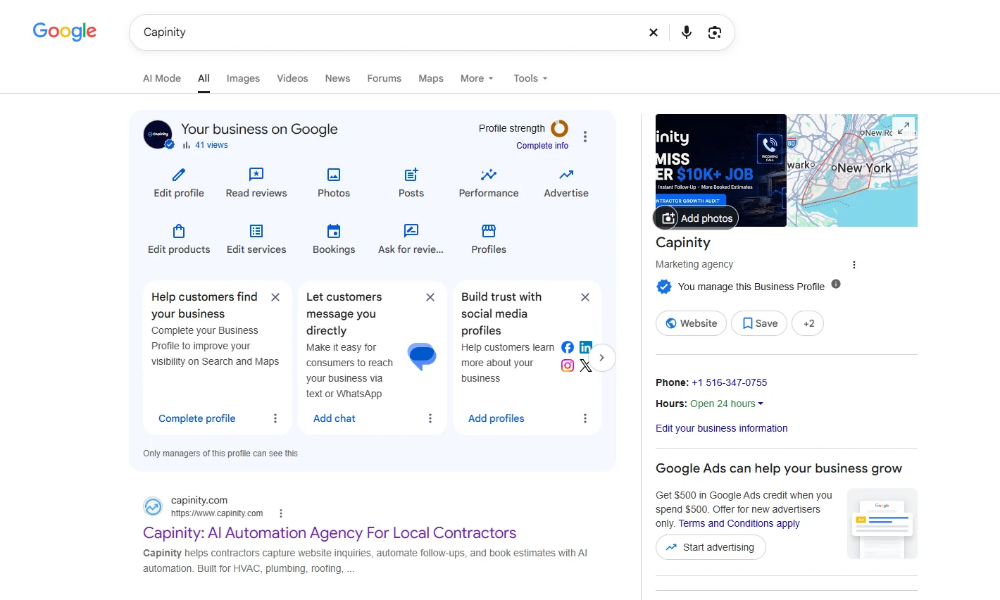
When someone searches for a plumber nearby, Google often shows local businesses through Google Maps and the local search results.
For example, a customer might search:
- Plumber near me
- Emergency plumber near me
- Plumber in Dallas
- Water heater repair in Dallas
- Drain cleaning near me
Your Google Business Profile can help your business appear for relevant local searches.
Make sure your profile includes:
- Accurate business name
- Correct primary category
- Phone number
- Website
- Business hours
- Service areas
- Plumbing services
- High-quality business photos
- Recent customer reviews
- Accurate business description
Keep your information consistent and up to date.
Also, make sure customers can easily understand what you do and where you provide service.
For example, instead of simply saying “Plumbing Services,” clearly list services such as drain cleaning, water heater repair, leak detection, sewer line repair, and emergency plumbing.
2. Get More Genuine Google Reviews
Reviews are important because homeowners often compare several plumbing companies before deciding who to contact.
A business with a strong collection of genuine reviews can make a better first impression and give potential customers more confidence.
After completing a job successfully, ask the customer if they would be willing to leave an honest review.
You can make the process easier by:
- Sending the review link after the job
- Asking at the right time
- Including a review request in your follow-up process
- Responding professionally to reviews
Don’t buy reviews or create fake ones. Focus on consistently delivering good service and making it easy for satisfied customers to share their experience.
3. Build a Plumbing Website That Generates Leads
Your website should do more than tell people about your company.
It should make it easy for visitors to contact you and take the next step.
A plumbing website should ideally include:
- A clear phone number
- Click-to-call functionality
- Request-an-estimate form
- Clear service information
- Service area information
- Customer reviews
- Emergency plumbing information
- Strong calls to action
- Mobile-friendly design
For example, instead of a vague button that says “Learn More,” use a clear action such as:
Request an Estimate
or
Call for Plumbing Service
Remember that many people searching for a plumber are already looking for help. Don’t make them search around your website to figure out how to contact you.
4. Create Separate Pages for Your Plumbing Services
One page listing every service may not be enough.
Create dedicated pages for your most important services so potential customers can quickly find relevant information.
For example:
- Drain Cleaning
- Water Heater Repair
- Emergency Plumbing
- Leak Detection
- Sewer Line Repair
- Pipe Repair
- Toilet Repair
- Commercial Plumbing
Each page should explain:
- What the service is
- Common problems customers experience
- How your company helps
- Areas you serve
- Why customers should choose your business
- How to request service
This also gives your website an opportunity to target more specific searches.
For example:
Water Heater Repair in Dallas
can target a more specific search than simply trying to rank one general plumbing page for everything.
5. Target Local Plumbing Searches
Plumbing is a local service, so your SEO strategy should focus on the locations where you actually work.
Instead of targeting only broad keywords like:
plumber
consider more specific searches such as:
- Plumber in Dallas
- Emergency plumber in Dallas
- Drain cleaning in Dallas
- Water heater repair in Dallas
- Sewer line repair in Dallas
The goal isn’t to add location keywords everywhere.
Your content should naturally explain your services and service areas while providing useful information for people looking for plumbing help in those locations.
6. Use Local SEO to Generate More Plumbing Leads
Local SEO helps your business become more visible when people search for plumbing services in your area.
A strong Local SEO strategy can include:
- Google Business Profile optimization
- Local keyword research
- Service page optimization
- Location pages
- Review management
- Local citations
- Relevant local links
- Website optimization
- Technical SEO
Think about the customer journey:
Google Search → Your Business → Website or Phone → New Lead → Booked Job
Getting found is the first step.
But getting found doesn’t automatically mean getting the customer.
Your website, reviews, messaging, and lead-response process all play a role in turning visibility into actual opportunities.
7. Run Google Ads for High-Intent Searches
Google Ads can put your plumbing business in front of people who are actively searching for a service.
For example:
“Emergency plumber near me”
“Water heater repair Dallas”
“24 hour plumber Dallas”
These searches can indicate strong purchase intent.
However, advertising doesn’t guarantee a booked job.
Imagine spending money to generate a plumbing lead, only for the customer to call while you’re on another job and nobody answers.
That’s why your advertising strategy and lead-response process should work together.
Getting the lead is only part of the process.
8. Use Social Media to Build Local Awareness
Social media may not produce every plumbing lead immediately, but it can help potential customers become familiar with your business.
You can share simple content such as:
- Before-and-after plumbing projects
- Customer testimonials
- Plumbing tips
- Common plumbing problems
- Emergency plumbing advice
- Short educational videos
- Team introductions
- Maintenance tips
- Frequently asked plumbing questions
For example, a plumber could create a short video titled:
“3 Signs Your Water Heater May Need Attention”
This type of content can demonstrate expertise while keeping your business visible to local customers.
You don’t need every post to go viral.
The goal is to build trust and stay recognizable.
9. Build a Referral System
Your existing customers can become a valuable source of new business.
If someone has a good experience with your plumbing company, they may recommend you to:
- Friends
- Family
- Neighbors
- Property managers
- Other local businesses
Make referrals easy.
After completing a successful job, you can ask the customer something as simple as:
“If you know someone who needs plumbing help, we’d appreciate you passing our name along.”
You can also build relationships with complementary local businesses, such as property management companies, real estate professionals, and remodeling businesses.
10. Respond to New Plumbing Leads Quickly
This is where many businesses lose opportunities.
Imagine this:
A homeowner needs a plumber.
They call your business.
You’re working on another job and can’t answer.
They leave a voicemail.
Then they search Google again.
They call another plumber.
The second plumber answers.
The job goes to them.
You may have generated the lead, but you didn’t capture the opportunity.
Now consider a different process:
Customer contacts you → Instant response → Job details collected → Follow-up → Appointment
The customer knows someone received their request.
That’s a much better experience.
Your lead-response process can include:
- Instant responses to new inquiries
- Missed-call text-back
- Website chat
- SMS follow-up
- Email follow-up
- Lead qualification
- Appointment scheduling
This is one area where automation can help.
Instead of expecting a busy plumber to manually respond to every inquiry immediately, an automated system can handle the first response and help move the conversation forward.
11. Follow Up With Plumbing Leads
Not every potential customer is ready to book immediately.
Someone may say:
“I’ll think about it.”
Or:
“Let me check with my spouse.”
Or:
“I’ll call you back later.”
Without a follow-up process, those leads can easily be forgotten.
A simple follow-up sequence might look like:
Day 1: Respond to the inquiry
Day 2: Send a helpful follow-up
Day 4: Check whether they still need help
Day 7: Send a final reminder
The exact timing depends on the business and type of service.
The important thing is consistency.
A follow-up shouldn’t feel like spam. It should make it easy for the potential customer to continue the conversation or book the service.
12. Track Where Your Plumbing Leads Come From
If you want to grow your plumbing business, you need to know which marketing activities are actually producing opportunities.
Track things such as:
- Phone calls
- Website forms
- Google Business Profile interactions
- Organic Google traffic
- Google Ads
- Referrals
- Social media inquiries
But don’t stop at counting leads.
Look at the entire funnel:
Leads → Estimates → Jobs → Revenue
For example, one marketing channel might generate 50 leads but only two customers.
Another might generate 15 leads and five customers.
The second channel may be much more valuable.
Tracking these numbers helps you make better decisions about where to spend your time and marketing budget.
13. Don’t Just Generate More Leads – Capture More of Them
This is one of the most important ideas for any plumbing business.
You can invest more money into advertising.
You can improve your Google rankings.
You can post more on social media.
You can generate more website traffic.
But if new inquiries aren’t answered and followed up with, you’re still leaving opportunities on the table.
Think of your lead process like this:
Get Found → Get Contacted → Respond Fast → Follow Up → Book the Job
Every step matters.
This is why improving your existing lead-handling process can sometimes be just as important as generating additional leads.
How Capinity Helps
Capinity helps businesses respond to new inquiries faster and automate parts of the follow-up process.
Depending on your setup, this can include:
- Instant responses to new leads
- Missed-call text-back
- AI website chat
- Automated SMS and email follow-up
- Lead qualification
- Appointment booking
The goal isn’t simply to generate more leads.
It’s to help businesses capture more of the opportunities they’re already receiving.
How to Get More Plumbing Leads: Quick Checklist
Use this checklist to identify areas you can improve:
- Optimize your Google Business Profile
- Collect genuine customer reviews
- Build a mobile-friendly website
- Make your phone number easy to find
- Create individual service pages
- Target relevant local searches
- Improve your Local SEO
- Consider Google Ads for high-intent searches
- Stay active on social media
- Build a referral system
- Respond quickly to new leads
- Set up missed-call text-back
- Follow up with potential customers
- Track leads, estimates, and booked jobs
Frequently Asked Questions
How can I get more plumbing leads?
Start by improving your visibility on Google, optimizing your Google Business Profile, collecting genuine reviews, building a conversion-focused website, and targeting local plumbing searches. Then make sure new inquiries receive a fast response and consistent follow-up.
What is the best way to generate plumbing leads?
There isn’t one method that works for every plumbing business. A combination of Local SEO, Google Ads, referrals, a strong website, reviews, and social media can create multiple sources of leads.
How do plumbers get more customers?
Plumbers can attract customers through Google Search, Google Maps, referrals, paid advertising, social media, and local partnerships. Turning those opportunities into customers requires a fast and consistent lead-response process.
How much do plumbing leads cost?
The cost varies depending on the location, service, competition, marketing channel, and quality of the lead. Instead of looking only at the cost per lead, businesses should also track how many leads become paying customers.
Is Google Ads worth it for plumbers?
Google Ads can be useful for plumbing businesses because it can put your company in front of people actively searching for plumbing services. However, the results depend on targeting, budget, landing pages, competition, and what happens after someone contacts the business.
How can Local SEO help a plumbing business?
Local SEO can help a plumbing business become more visible when people search for plumbing services in its service area. Optimizing your Google Business Profile, website, service pages, reviews, and local signals can support stronger local visibility.
How can I get more plumbing customers without buying leads?
Focus on channels you can build over time, including Local SEO, Google Business Profile optimization, customer reviews, referrals, useful content, and a strong website. You can also improve how you handle the leads you’re already receiving.
How quickly should a plumber respond to a new lead?
As quickly as reasonably possible. Customers looking for urgent plumbing help may contact multiple businesses, so a fast response can help keep the conversation moving while the customer’s need is still active.
How can plumbers follow up with potential customers?
Plumbers can use a simple follow-up process through phone calls, SMS, or email. Automated follow-up can also help ensure potential customers don’t get forgotten when the business owner is busy.
What should a plumbing website include?
A plumbing website should clearly explain the services offered, service areas, contact information, phone number, reviews, calls to action, and ways to request service. It should also work well on mobile devices.
Final Thoughts
Getting more plumbing leads isn’t only about finding more people.
It’s about building a system that takes someone from:
Search → Contact → Response → Follow-Up → Appointment → Customer
Your Google visibility brings people to your business.
Your website and reviews help build trust.
Your response and follow-up process help turn those opportunities into conversations and booked jobs.
More leads are great. But capturing the leads you already have is even better.
If your plumbing business is getting inquiries but struggling to respond to every call, message, or website lead, Capinity can help automate the follow-up process and make sure fewer opportunities slip away.
Want to see where your business may be losing leads? Get a free audit from Capinity.